Understand your requirement
Review hazards and foreseeable access for bandsaw blade & access guarding, machine motion and stopping behaviour, and operating, cleaning and maintenance tasks using your samples, drawings and production observations.
Compare practical options for bandsaw blade and access guarding, including what each route needs, where it fits and what to check before you decide.
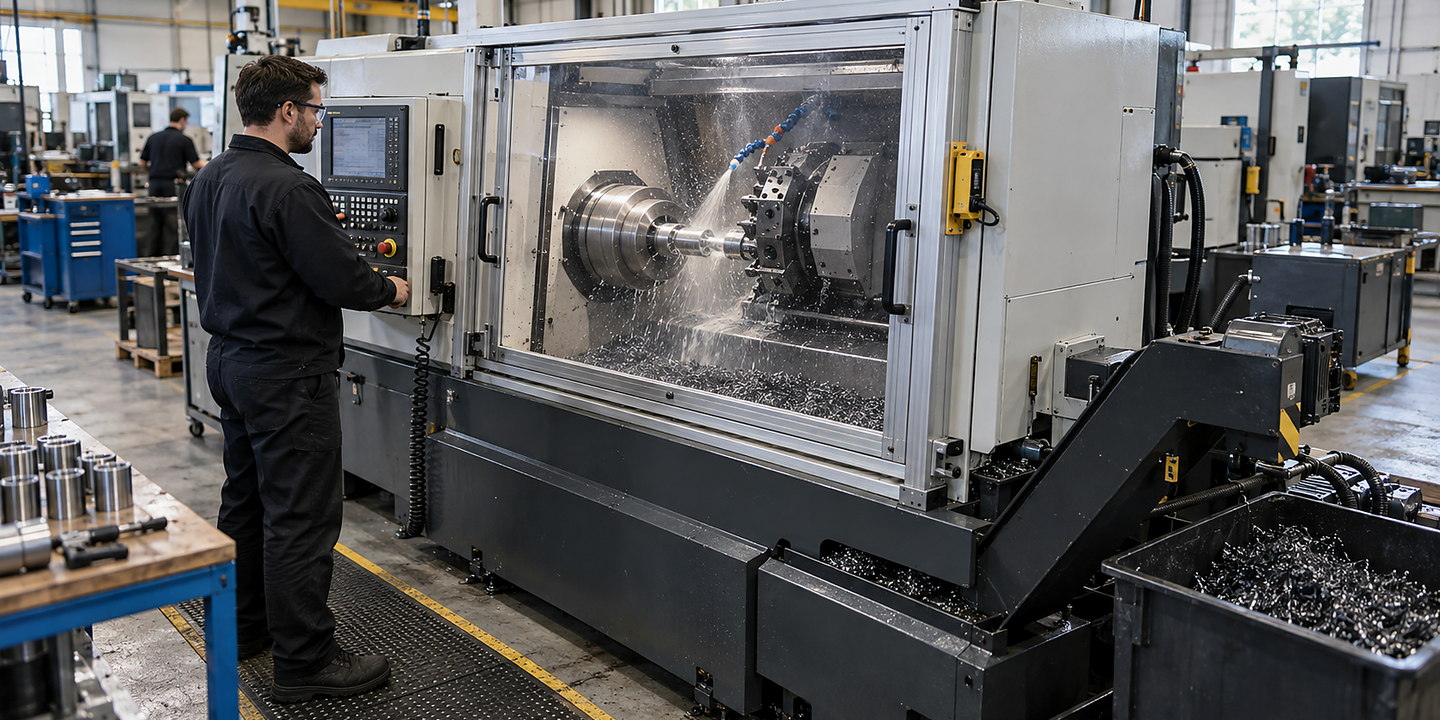
Illustrative enclosed turning machine.
The right solution for bandsaw machine guards is the simplest system that reliably handles your stated duty, line connections and expected exceptions.
Plan bandsaw machine guards around your machine hazards, operator tasks, access, stopping behaviour and validation evidence. Discuss a site-specific safeguarding concept with Oxford Machine Guarding.
Plan bandsaw machine guards around your machine hazards, operator tasks, access, stopping behaviour and validation evidence. Discuss a site-specific safeguarding concept with Oxford Machine Guarding. When you compare solutions, check how each option handles hazards and foreseeable access for bandsaw blade & access guarding, machine motion and stopping behaviour and your surrounding line.
Discuss your application

Review hazards and foreseeable access for bandsaw blade & access guarding, machine motion and stopping behaviour, and operating, cleaning and maintenance tasks using your samples, drawings and production observations.
Run focused trials for bandsaw machine guards so you can see why an option is recommended or ruled out.
Resolve existing control-system architecture, space, visibility and operator ergonomics, controls, safety, operator access and maintenance before site work.
Check risk-reduction and validation evidence in normal, difficult and fault conditions, then agree training and support for your team.
Typical support: site survey, risk-led guard design, manufacture, installation and validation within an agreed scope.
| Approach | Often suitable when | Watch for |
|---|---|---|
| Bandsaw Machine Guards | You need a dedicated solution for a clearly defined duty, product or part range and line interface. | Current standards and required performance levels must be assessed for the complete machine and intended use. |
| Fixed Physical Guarding where Access Is Rare | A task-based review identifies areas that do not require frequent access and can remain enclosed during normal operation. | Include foreseeable access for setting, clearing, blade changes and maintenance in the guarding review. |
| Interlocked or Presence-Sensing Protection where Frequent Intervention Is Foreseeable | The review identifies recurring access to dangerous parts and the need to assess protection together with machine stopping and control behaviour. | Assess stopping behaviour, access timing, control-system integration and required validation for the complete machine. |